
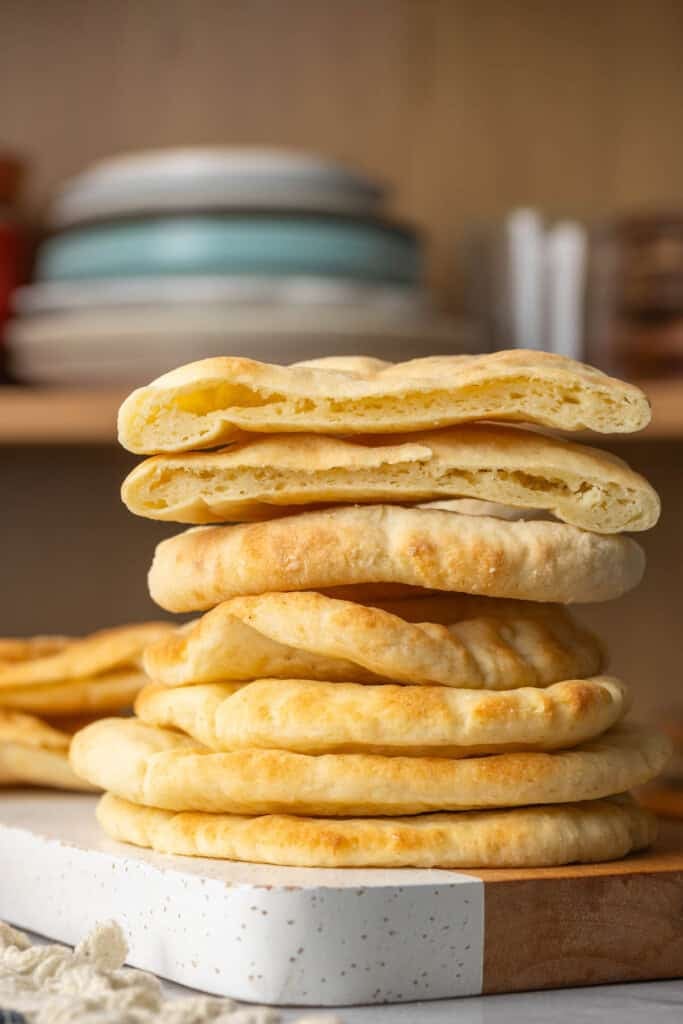
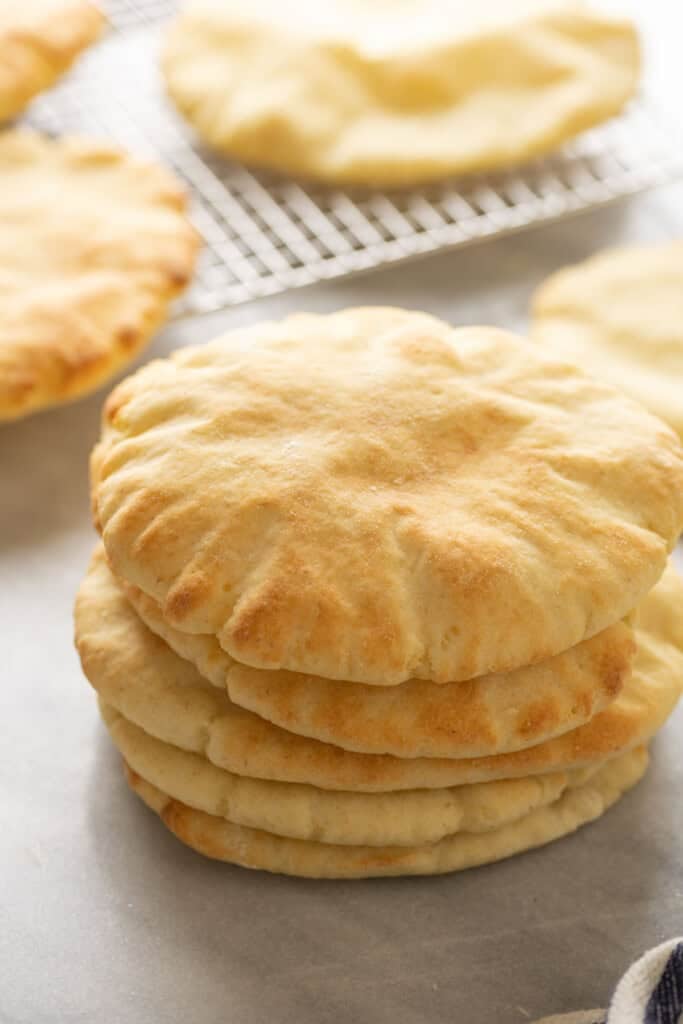
Unlike traditional pita made from a lean dough (similar to pizza dough) this gluten free pita bread recipe is made with full-fat greek yoghurt which makes for a softer, fluffier and more golden pita that puffs up to create a nice big pocket that’s perfect for stuffing.
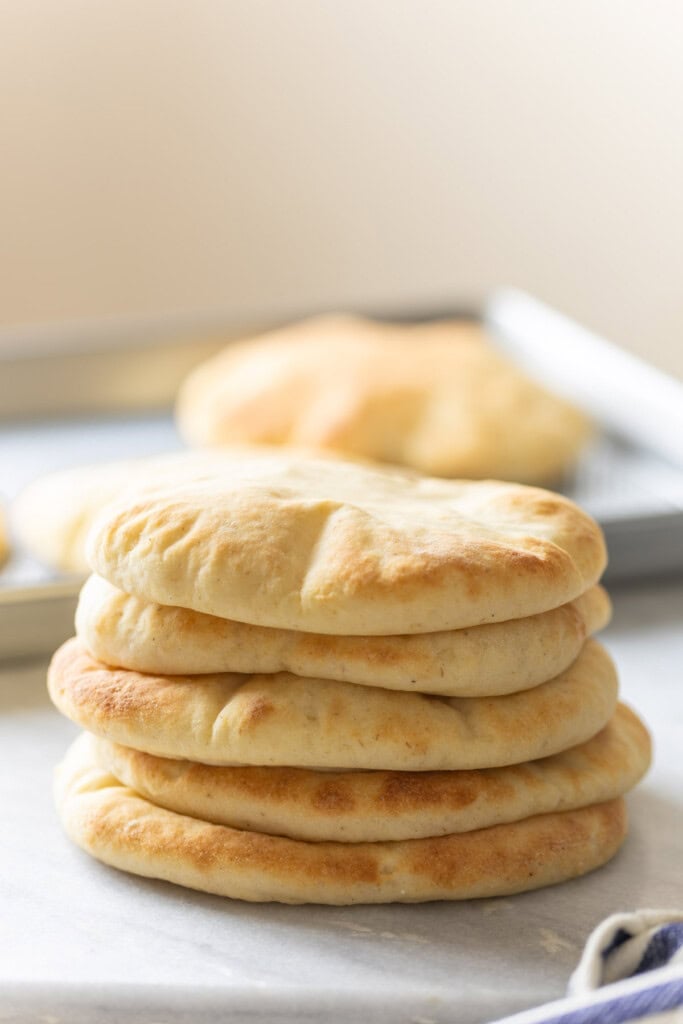

Gluten Free Pita Bread at A Glance
- Oven Baked:
- You need to bake these in a super hot oven to make them puff up. The quick blast of hot air sets the outside of the pita while the insides steam up to create the signature puffy pita pocket.
- Made with yoghurt:
- Yoghurt isn’t usually found in regular pita bread recipes, but neither is gluten free flour so forget the rules. Yoghurt helps up create thicker, softer pita thanks to the added protein & moisture as well as a mildly tangy flavor – a bit like sourdough.
- Holds fillings well without breaking!
- This pita held up even when absolutely stuffed full of beef koftas (courtesy of Yotam Ottolenghi’s, Extra Good Things), chickpeas & chunks of fried halloumi. These things are strong without feeling too chewy or tough.
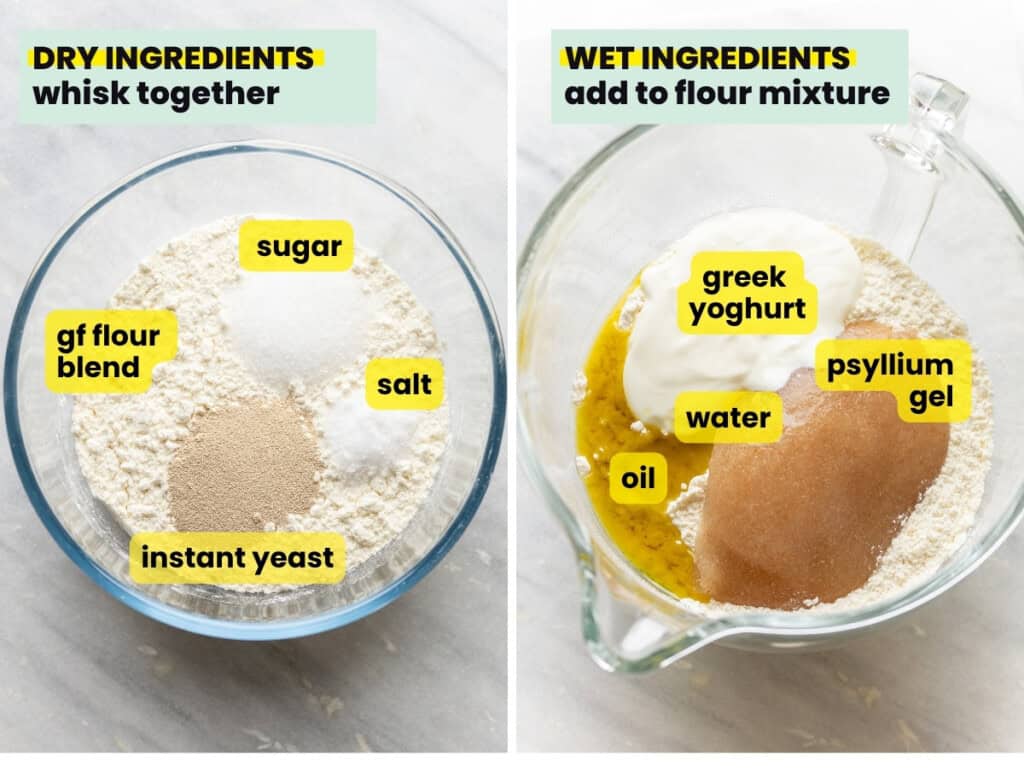
Ingredients You’ll Need
Dry Ingredients
- gluten free flour blend
- instant yeast
- sugar
- salt
Wet Ingredients
- water
- psyllium husk
- olive oil
- greek yoghurt
How to Make This Gluten-Free Pita Bread Recipes
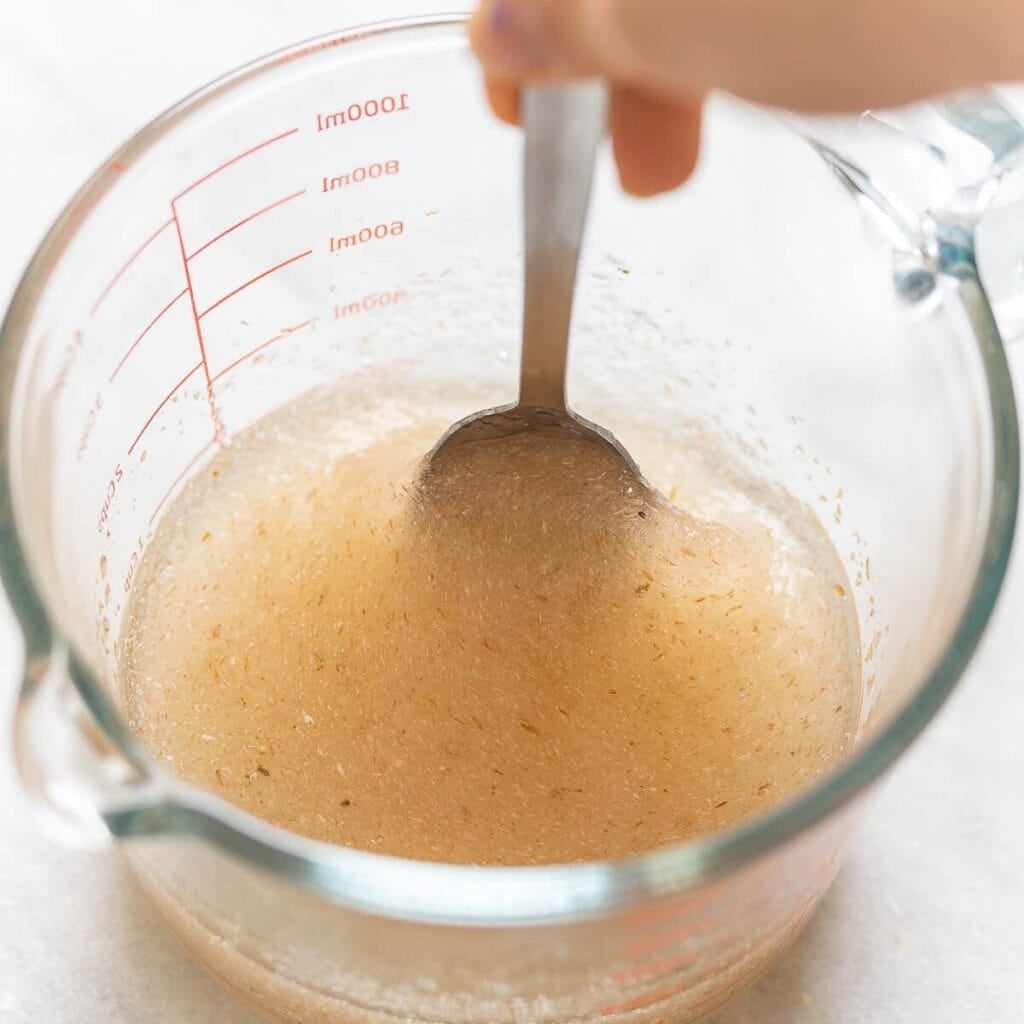
Psyllium gel: Whisk psyllium husk + water together. Set aside.
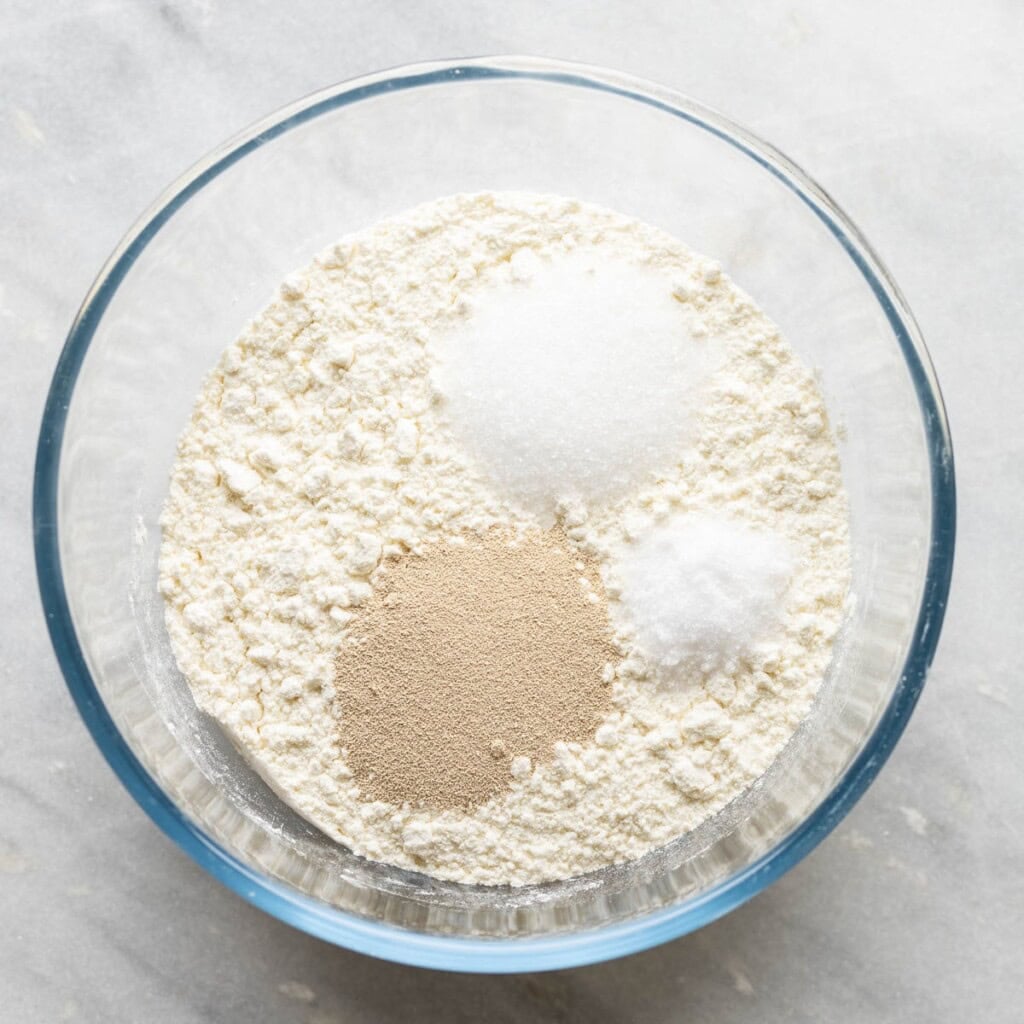
Dry ingredients:Whisk dry ingredients together.
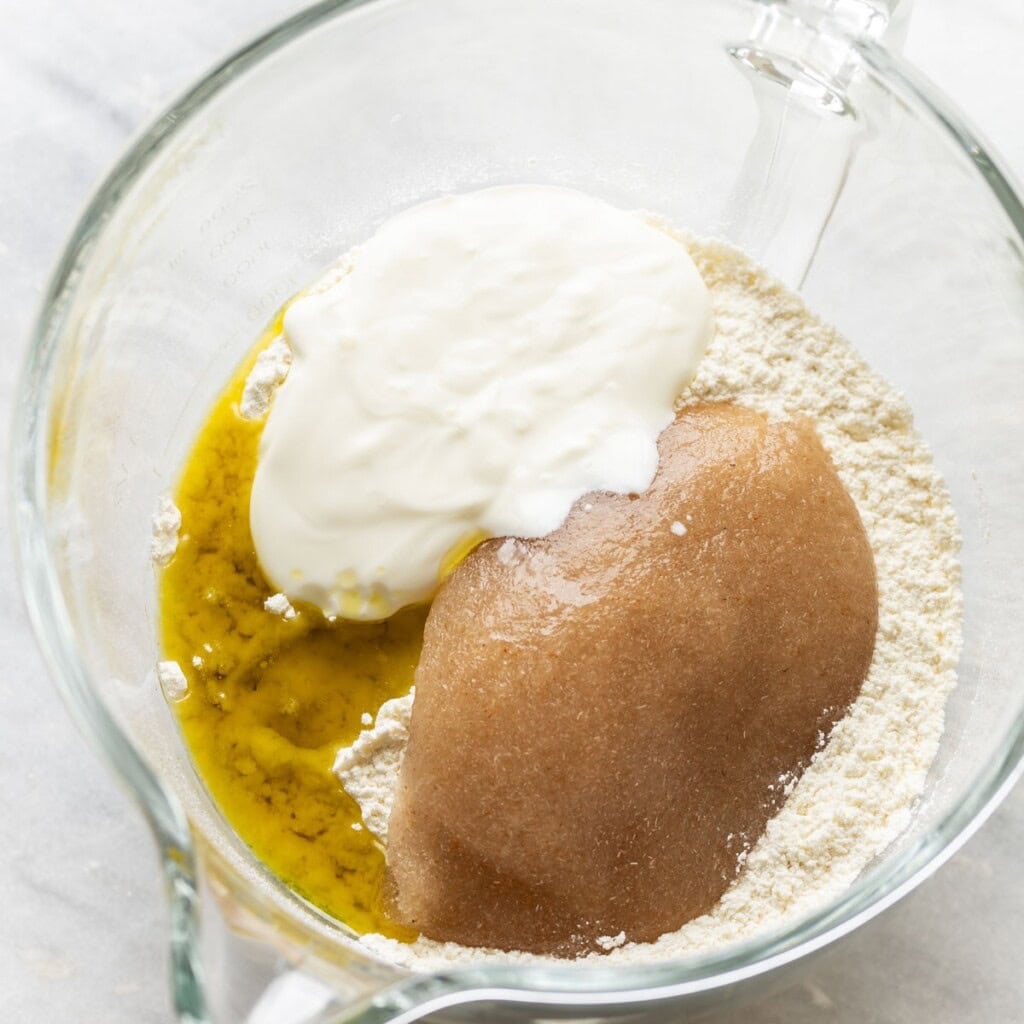
Wet ingredients: add psyllium gel, yogurt & oil.
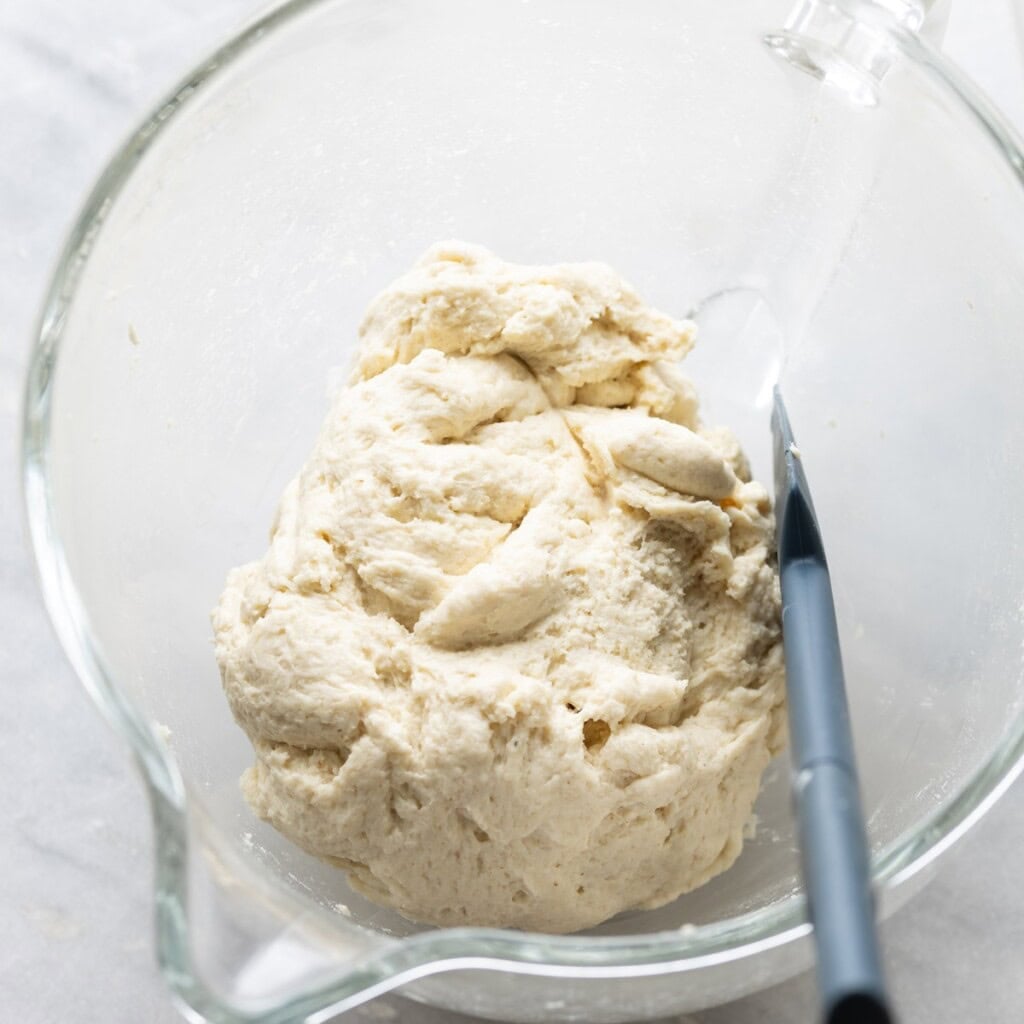
Mix dough: Mix on medium-high about 5 minutes until well combined.
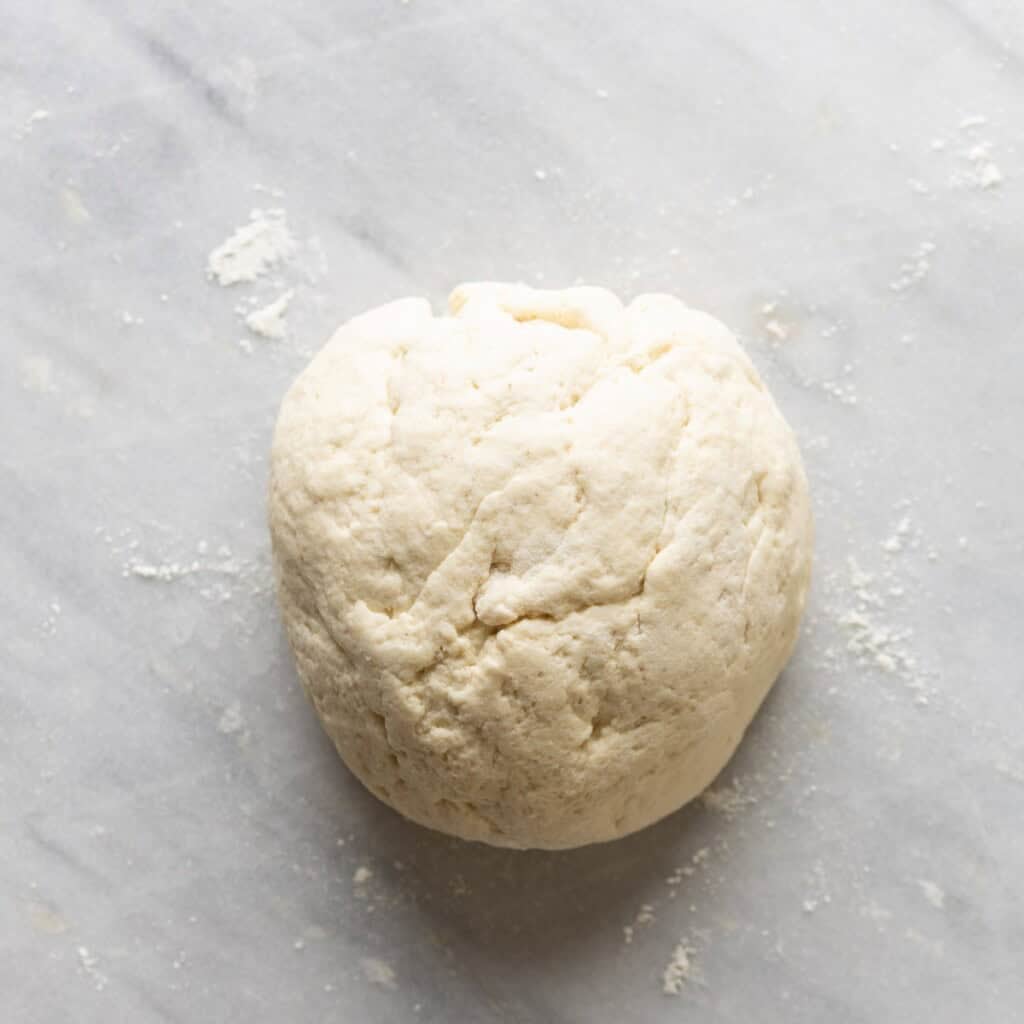
Lightly knead: Knead briefly on a floured surface.
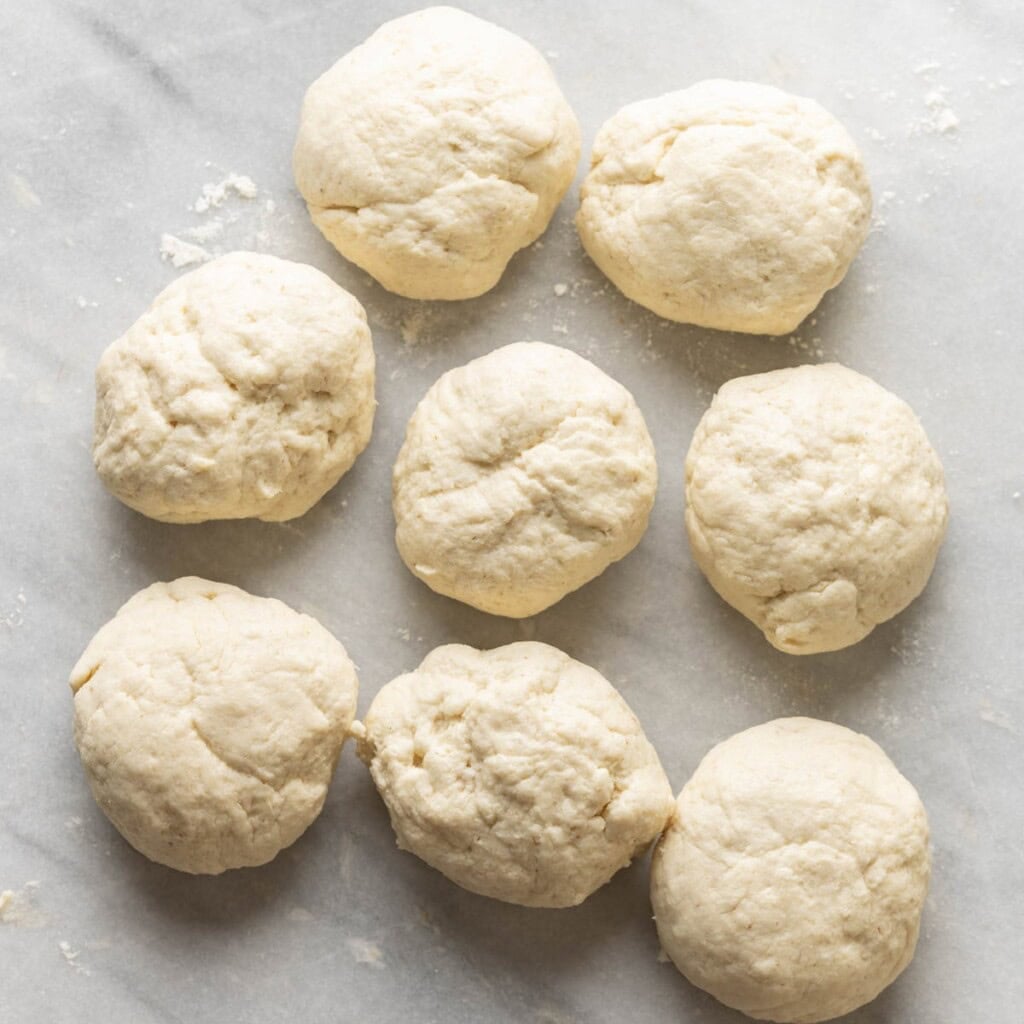
Divide: Divide into 8 equal pieces (about 120g) each.
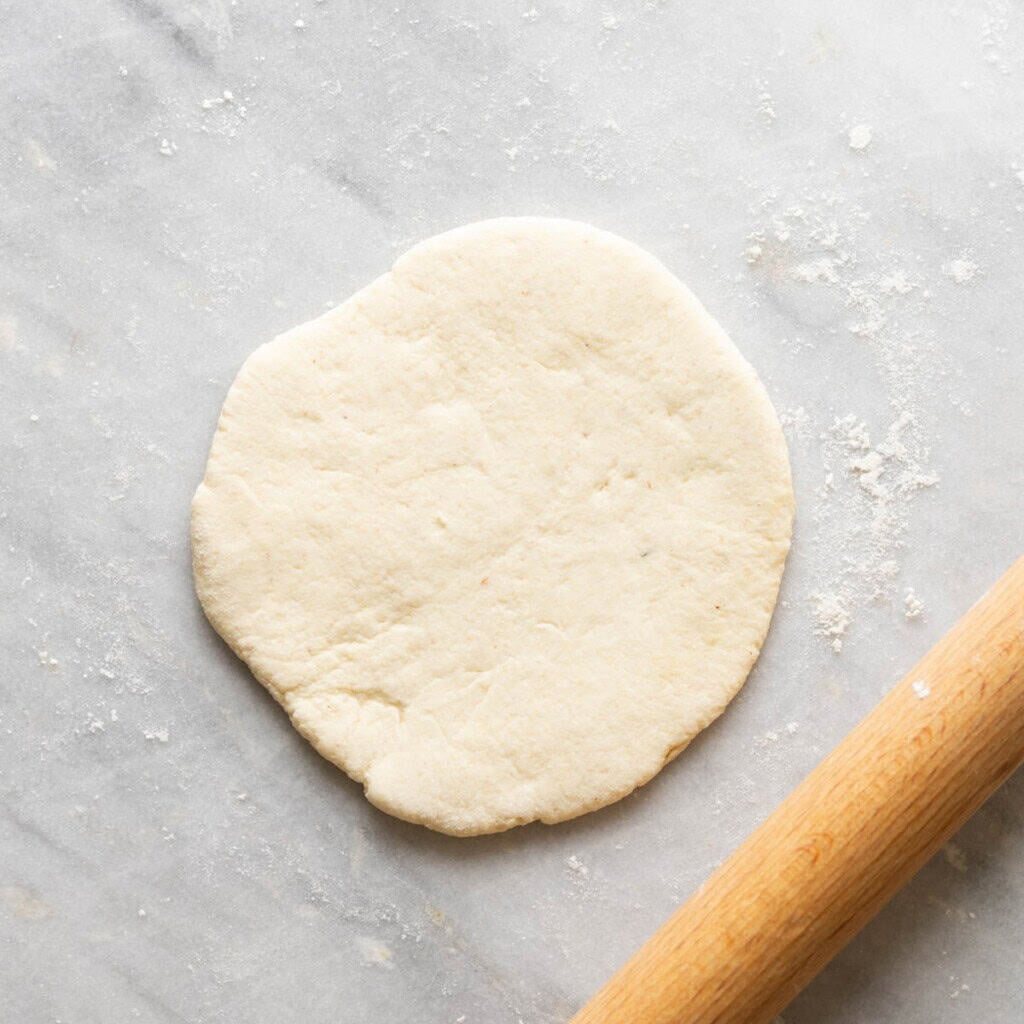
Roll: Roll each piece of dough out into a 6-inch circle, about 1/8-1/4 inch thick.
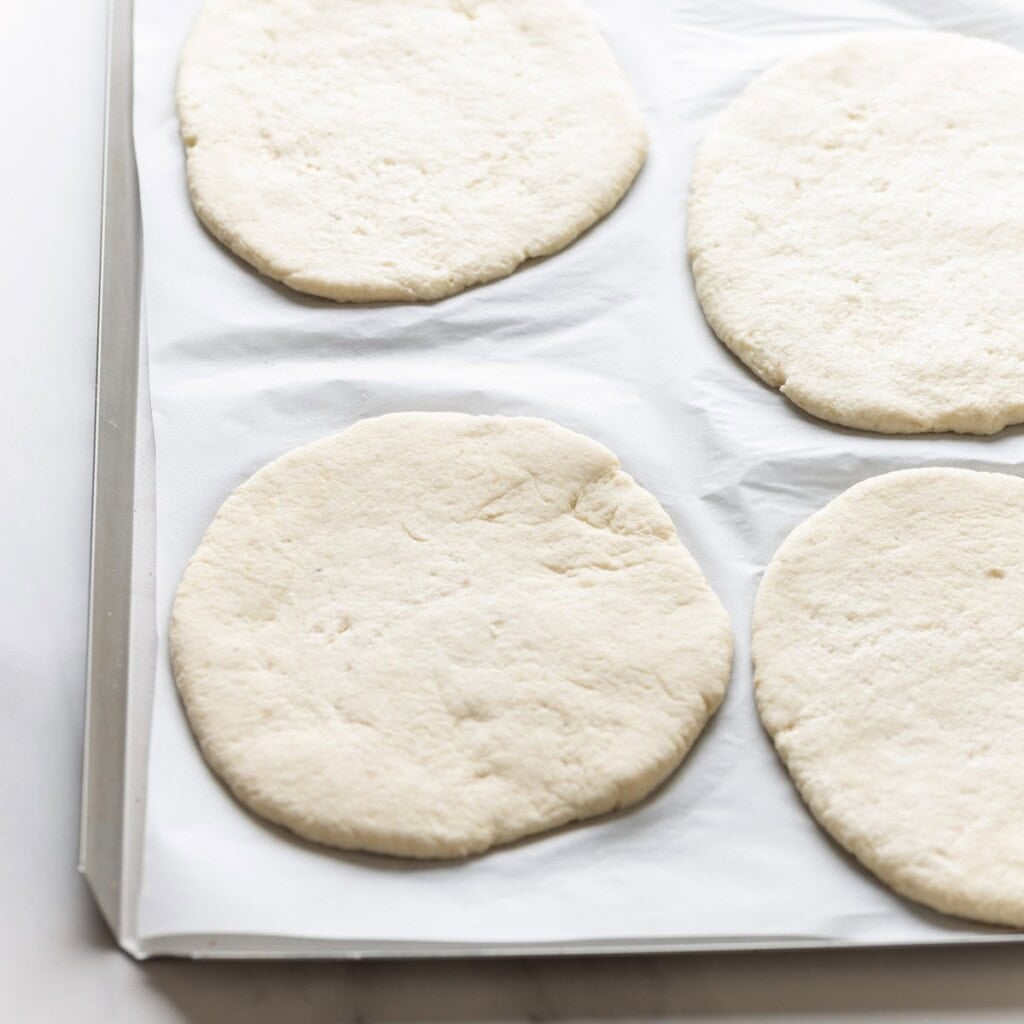
Transfer: Transfer the rolled dough pieces to 2-3 baking sheets lined with baking paper.
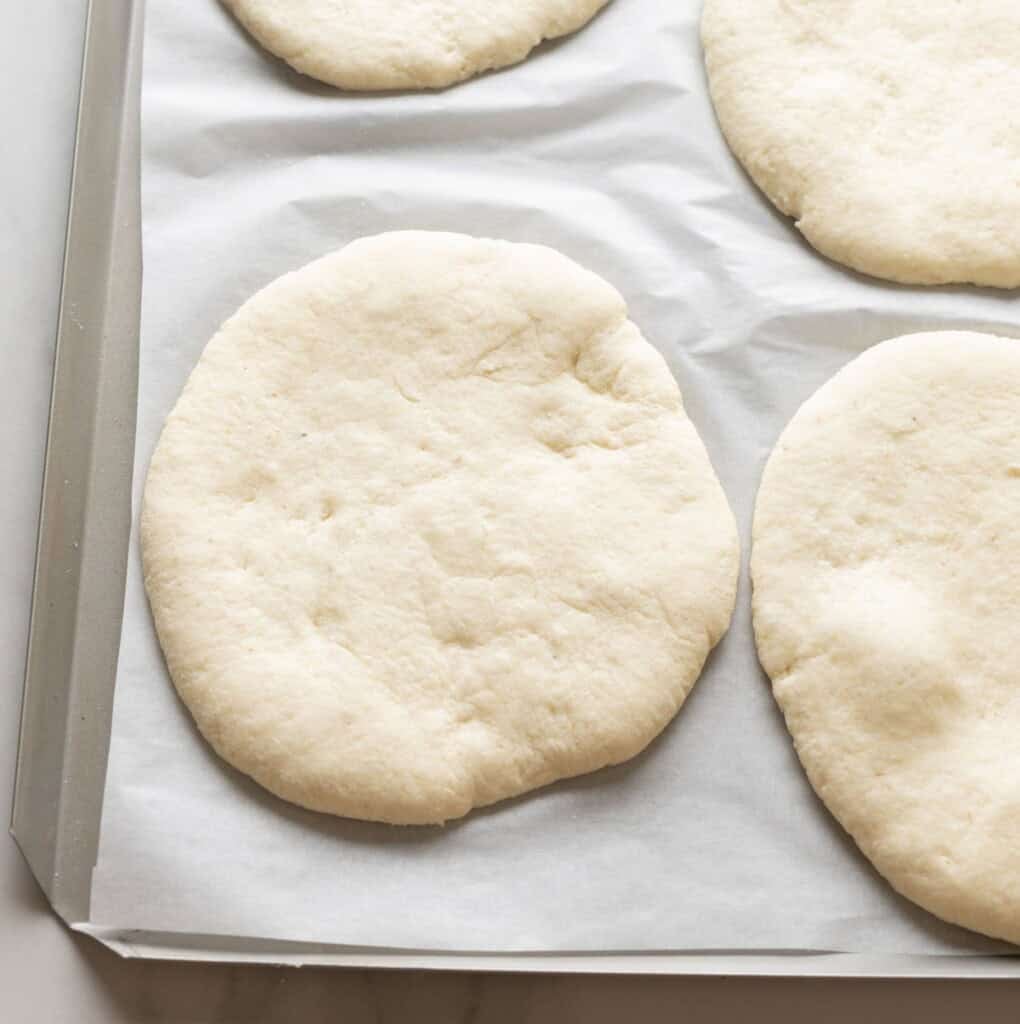
Proof: Lightly cover and set the baking sheets aside to rest for 1 hours – ideally somewhere warm.
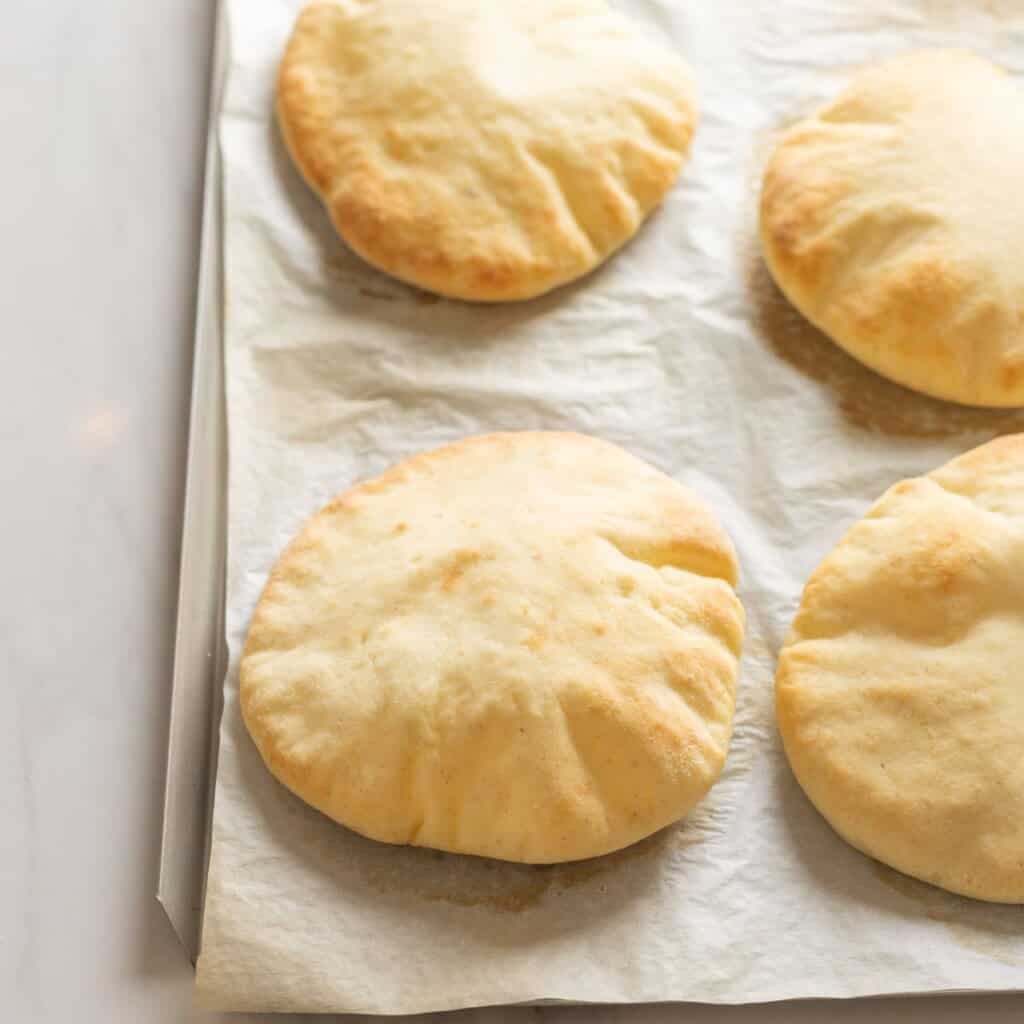
Bake: Bake in a hot oven for about 7-8 minutes until lightly golden & puffed up.
🌟Make this Next🌟
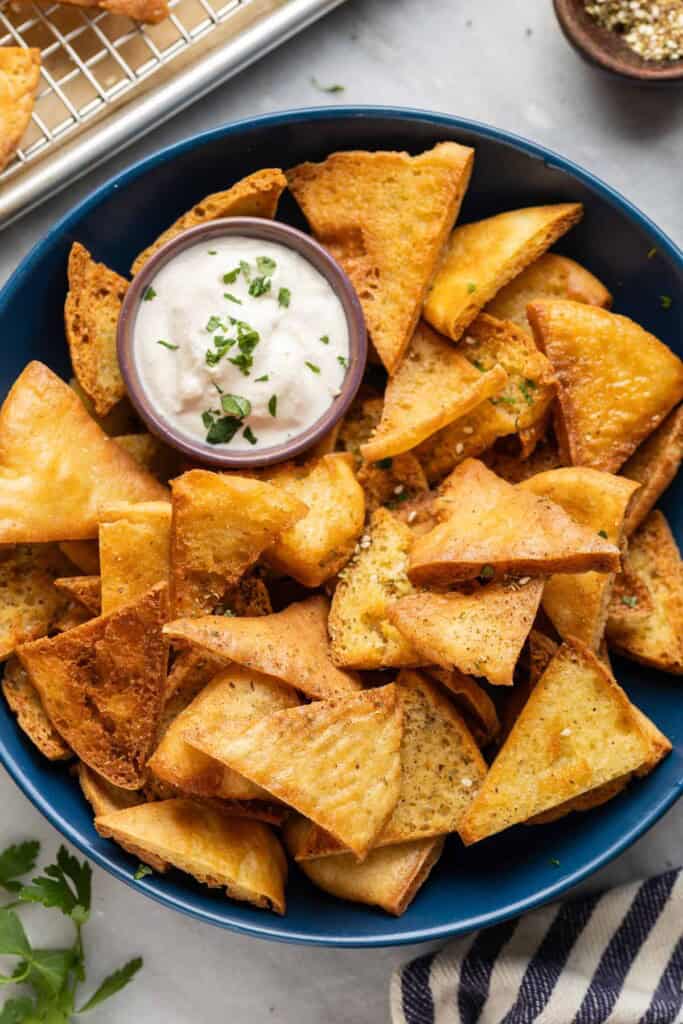
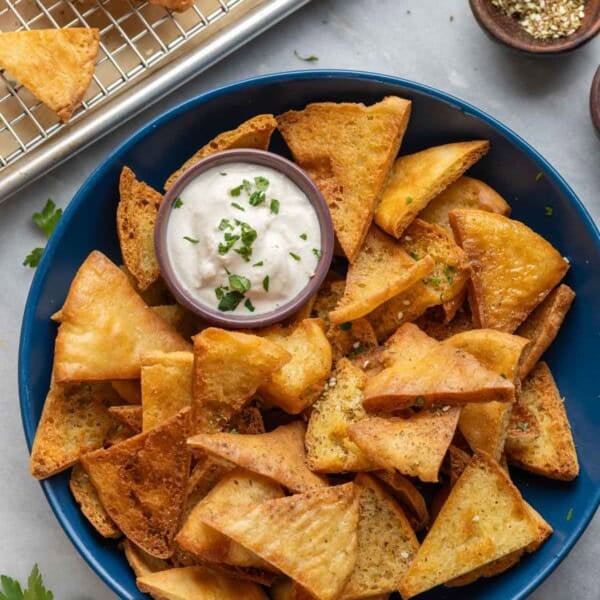
Learn how to make your own homemade gluten free pita chips, two different ways – baked or fried! The end result are golden, crunchy chips made with simple ingredients. Enjoy as is with a sprinkle of salt or pair them with a creamy hummus or yoghurt dip on the side.
Recipe Questions
What type of yoghurt is best?
I like Greek yoghurt here because the extra protein & fat will make your pita extra soft & tender with a tangier flavor, but you can definitely use regular (unstrained) yoghurt.
Just make sure to your plain/unflavored yoghurt!
Can I use vegan yoghurt?
Yes! Just make sure it’s unflavoured.
Can I use something other than yoghurt?
Yes!
Traditional pita bread is actually made with lean dough (no enriching ingredients like butter, milk eggs, etc). With that in mind I tested this recipe out using water in place of yoghurt and the recipe still turned out great.
That being said, the final texture wasn’t as soft, the flavor wasn’t as interesting and the pita didn’t really golden up much without the added milk sugars from the yoghurt.
If you don’t have any yoghurt on hand or want a simple, dairy-free alternative – water works great!
Why roll the pita out before proofing?
Gluten free dough typically does better the less you handle it. This is why you’ll find many gluten free bread recipes only require one rise.
If you want to avoid punching out the trapped air/gas in your dough after proofing – roll the dough first into pitas before proofing then bake when you’re reading without disrupting the dough.
Does this recipe freeze well?
Yes!
After cooling, freeze leftover pita bread in a freezer-safe bag or container. Separate the pita with a piece of parchment paper in between to keep them from sticking together.
Reheat from frozen in the microwave: Wrap up the pita in a damp paper towel & microwave for 15-30 seconds until soft & warm
Reheat from frozen in the oven: Sprinkle the pita with water then wrap up in baking paper and bake at 350°F for about 10 minutes or until soft & warm.
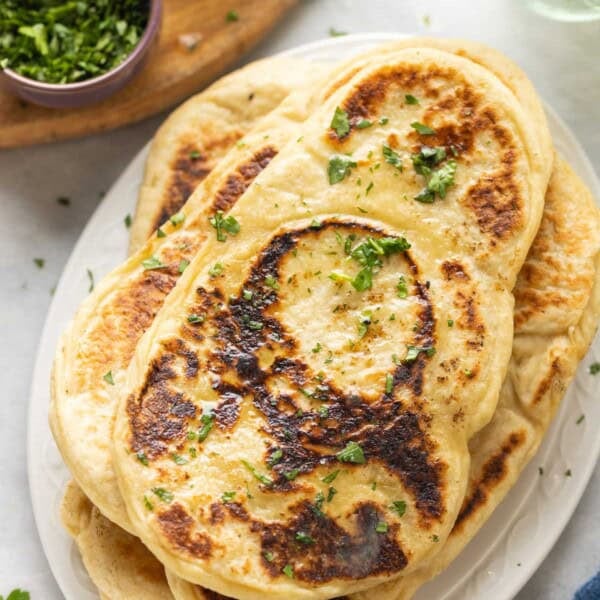
How does this pita recipe differ from my gluten free naan bread?
Good question! The difference is in the cooking method.
If you compare the two recipes side-by-side you might notice the ingredient list is identical. Some of the step-by-step pics below are even used in both recipe explanations.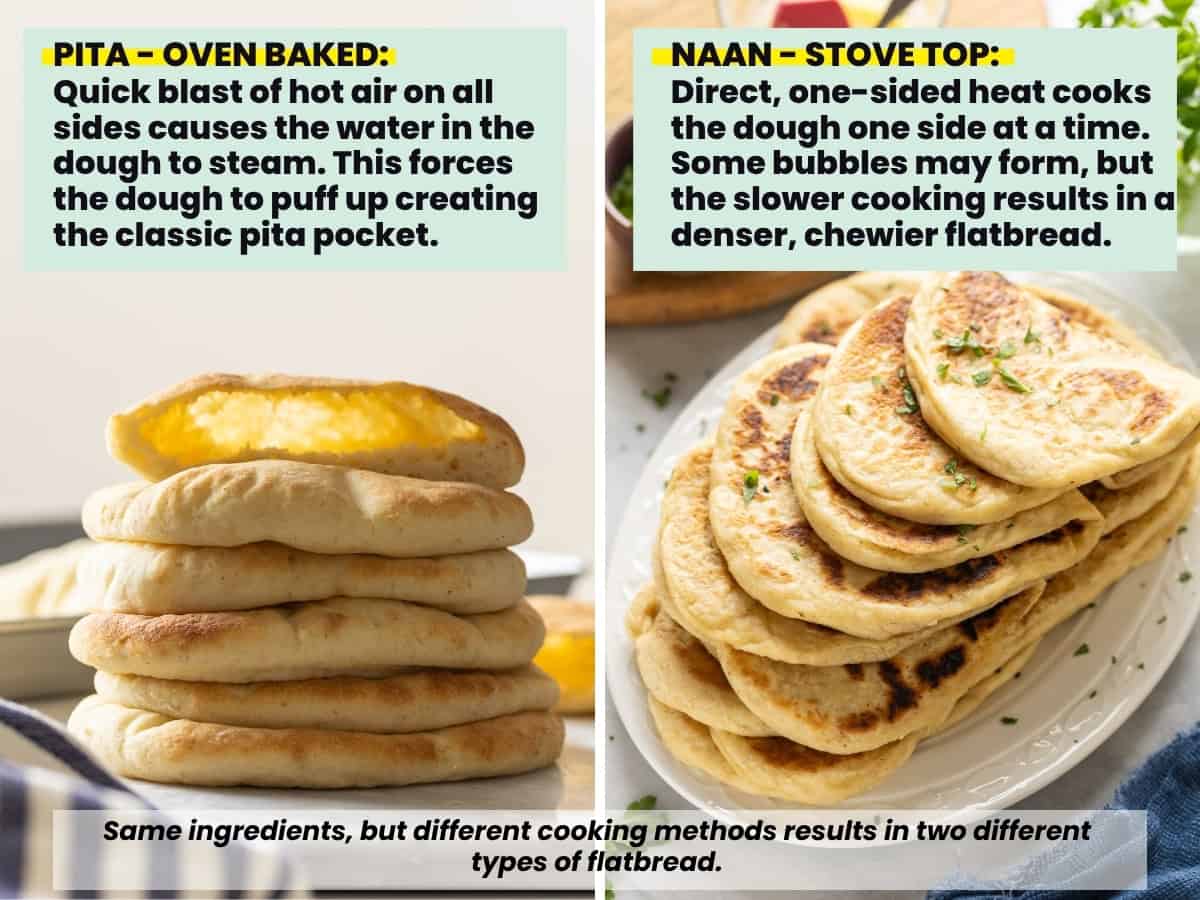
>>Baking the dough in a hot oven immediately surrounds the dough with hot air. The hot air quickly cooks the outside of the dough to form the crust and forces the trapped moisture in the middle has to turn into steam to escape. As the hot, steamy air rises it forces the dough up which to create nice, airy pockets in the middle of our pita.
FYI: This is also how you make flaky pie crusts & choux pastry!
>>Cooking the dough on the stove top in a hot skillet cooks the dough, one side at a time with a much more direct heat. You might notice a few bubbles form over the surface of the dough as the bottom cooks, but
Enjoy!
Let me know if you try this Gluten-Free Pita Bread recipe! Leave a comment and review with your thoughts. I always appreciate the feedback and serving suggestions that you come up with!

Gluten Free Pita Bread Recipe
Soft & pillowy gluten free pita that puffs up in the oven - it's easy to make and way better than store bought gf versions!
Ingredients
- 5 tbsp whole psyllium husk (25g) + 1 ⅓ cups water (320g)
- 3 cups gluten free all purpose flour blend (420g)
- 1 tbsp granulated sugar
- 2 tsp instant yeast (AKA: quick-rise or rapid-rise yeast)
- 1 tsp fine grain sea salt
- 2 tbsp olive oil (30g)
- ½ full-fat plain greek yoghurt (120g)
- ⅓ cup water (80ml)
Instructions
- Pan/Proof Prep: Line 3-4 large baking sheets with parchment paper. Set aside. After rolling you will place the pita dough on the lined baking sheets to proof.
- Psyllium Gel: In a medium bowl, whisk 5 tbsp psyllium husk and 1 ⅓ cups water together until no lumps remain. Set aside.
- Whisk dry ingredients: In a stand mixer bowl, whisk flour, sugar, yeast and salt.
- Add wet ingredients: Add the psyllium gel, oil, yoghurt and water to the flour mixture.
- Mix dough: Mix on a medium speed with a dough hook or paddle attachment. Stop and scrape down the sides of the bowl at least once to make sure no flour pockets remain. Mix for about 5 minutes to ensure it's evenly mixed. The dough should be thick, a little bit sticky and should easily clump together when you scrape down the sides with a rubber spatula.
- Knead & Divide: Lightly flour your hands and a clean work surface. Place dough on the floured surface and gently knead until soft and uniform. Divide into 8-10 equal sized portions and roll into balls (about 100-125g each).
- Roll dough: Lightly re-flour your surface as needed and roll each dough ball out into 6-8 inch circles that are about ¼-inch thick. After rolling, transfer each circle of dough to the the prepared baking sheets. Repeat with the remaining dough balls - leave 1 inch of space in-between each piece of dough on the baking sheets. TIP: Make sure to roll the dough out evenly so the pita breads puff up evenly when the cook.
- Proof: Lightly cover the baking sheets with plastic wrap and set aside for 1 hours to rest/rise - ideally place the dough in a warm, dry free environment.
- Oven Prep: Adjust an oven rack in needed to the middle oven position then preheat to 450°F (230°C). TIP: Make sure to give your oven time to fully heat up - you need the blast of heat to get your pitas to puff up.
- Bake: Bake one baking sheet at a time in the middle of a fully preheated oven. Bake for about 7-8 minutes until puffed up and lightly golden. If you notice the pitas aren't puffing up evenly, rotate the baking sheet after about 5 minutes. Cool on a wire rack and repeat with the remaining pitas until done.
- Store: Cool and store in an airtight container or bag and keep in the fridge 1-2 weeks. To make them soft again, wrap the pitas up in a damp paper towel and microwave for about 10-20 seconds.
- Freeze for later: Cool completely then store in a freezer safe bag or container. Place a piece of parchment paper in between each pita to keep them from freezing together.
- Reheat from frozen: Splash a bit of water over the frozen pita then wrap up in parchment paper and bake in the oven for about 5-10 minutes at 350°F. Reheat in the microwave by wrapping up in damp paper towel and cooking for about 20-40 seconds.
Notes
- For best results: Use a kitchen scale to weigh ingredients. Small weight variations can make a big difference!
- Psyllium: Make sure to use whole psyllium husk, not psyllium husk powder. Powdered psyllium husk clumps quickly & easily when introduced to water which makes it harder to mix. If you only have powdered husk, reduce the amount to 6 tsp powdered husk OR just measure out 25g.
- Make it vegan: Swap the dairy yoghurt for vegan Greek-style yoghurt (unflavored) OR use water instead of yoghurt. Keep in mind that pita made with water won't be as soft without the extra fait/moisture or bake into a golden color without the extra milk/sugar proteins.
Nutrition Information:
Yield:
10Serving Size:
1 pitaAmount Per Serving: Calories: 214Total Fat: 4gSaturated Fat: 1gUnsaturated Fat: 3gCholesterol: 2mgSodium: 157mgCarbohydrates: 40gFiber: 3gSugar: 2gProtein: 5g
Leave a Review!